
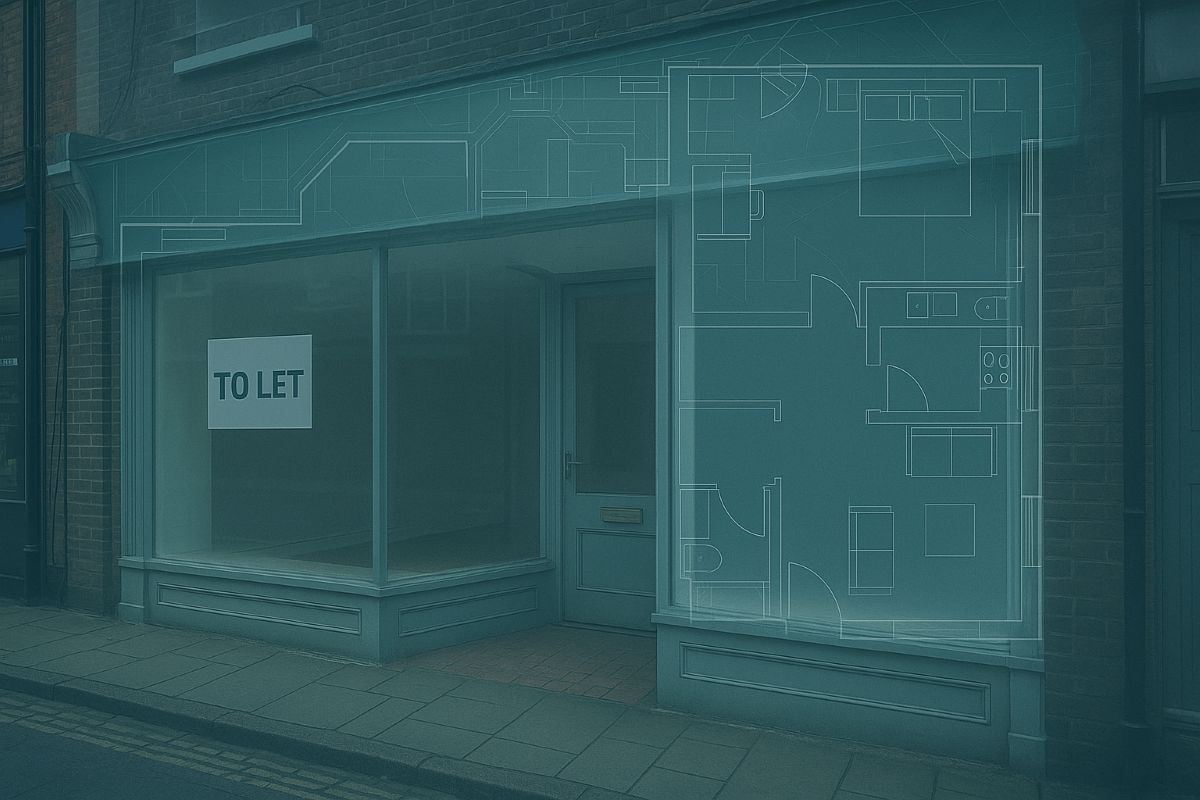
The high streets across Britain tell a story of change. Many retail units that once held thriving shops now sit empty; windows papered, “To Let” signs
The high streets across Britain tell a story of change. Many retail units that once held thriving shops now sit empty; windows papered, “To Let” signs fading. Those vacant commercial properties are both a challenge and an opportunity for investors and business owners rethinking town centres.
High-street vacancy has reached concerning levels in recent years, which has pushed developers and landlords to consider commercial-to-residential projects. Mixed-use outcomes (ground-floor commercial with flats above) can be compelling—but they require the right planning route, compliance, and finance.
The Rise of Commercial-to-Residential Conversions
Across the UK, concern about empty frontages has led to planning initiatives that make some changes of use simpler. In England, a key route is Permitted Development – Class MA (Use Class E → C3 dwellings) via prior approval, subject to tests and local restrictions (see Planning Portal / GOV.UK GPDO guidance). This sits alongside broader government moves to simplify plan-making, see Planning frameworks in England for the latest direction of travel.
Why conversions help communities
- Footfall & safety: bringing residents back into centres.
- Housing delivery: creating homes in sustainable, central locations.
- Conservation-led reuse: many councils expect traditional shopfronts and facades to be retained; interior layouts adapt behind period frontages.
Planning routes—what actually applies (England)
1) Class MA prior approval (Use Class E → C3)
Headlines to discuss with your planner:
- Eligibility/conditions (typical): building in Class E for ≥2 years; vacant for ≥3 months before the application; ≤1,500 m² floorspace changing use; exemptions apply (e.g., listed buildings).
- Prior-approval tests: transport/highways, noise from commercial uses, contamination, flood risk, adequate natural light in all habitable rooms, and (for certain buildings) fire safety.
- Local carve-outs: Article 4 directions can remove PD rights; conservation areas and listed buildings bring extra controls.
2) Full planning permission
Needed where Class MA doesn’t apply, where external works are extensive, or where the council’s policies require traditional shopfront retention and design detailing beyond PD.
Building, Energy & Access Standards (you’ll need these)
Converted dwellings must meet relevant Building Regulations (England): Part B (fire), Part E (sound), Part F (ventilation), Part L (energy), Part M (access), and Part O (overheating, where applicable). You’ll also need a valid EPC when selling/letting; domestic private rented homes are subject to MEES (currently EPC E minimum).
Financial Challenges of Mixed-Use Development
Acquisition & planning costs
High-street assets often price above peripheral sites; add planning fees, architectural design, heritage/daylight/noise studies and, where relevant, CIL / Section 106 contributions.
Renovation & compliance
Retail-to-residential typically means new plumbing/electrics, fire strategy, acoustic design, separate entrances/services, refuse & cycle storage, and natural-light compliance.
Insurance
Development requires specialist site/building works insurance; a standard buildings policy won’t cover major works or mixed use during construction.
Funding Options for Shop-to-Home Conversions
Traditional residential mortgages rarely fit until the scheme is completed and let. Typical routes:
- Bridging / development finance – purchase + build; lenders focus on experience, build budget, contingency, programme, and exit (sale/refi).
- Semi commercial mortgages – for retained assets with ground-floor commercial and residential above; lenders assess rental strength, DSCR, and the quality of the commercial covenant.
- Expect lower LTVs / higher deposits than standard BTL and scrutiny of the commercial tenant/lease.
(For regulated advice, speak to an FCA-authorised broker.)
Legal & Regulatory Considerations: what councils look at
- Local Plan policies on primary shopping frontages and town-centre hierarchy
- Conservation/listings: external works, materials, signage, and shopfront retention
- Servicing: deliveries, waste/plant, ventilation/odour for retained commercial
- Amenity: privacy, outlook, daylight/sunlight, noise management (especially above pubs/food uses)
Due-diligence checklist (save this)
Pre-acquisition
- Title/covenants; rights of access/loading; utilities capacity; flood/contamination searches
- Noise context (late-night economy), daylight/sunlight potential, escape routes
- Position on Article 4 and conservation/listed status
Planning route
- Can you use Class MA? If not, what full-planning case is needed?
- Prior-approval pack: transport, noise statement, contamination/flood, natural-light assessment, heritage where applicable
Technical
- Fire strategy (Part B), acoustics (Part E), ventilation (Part F), Part L fabric upgrades, Part O overheating
- Refuse/cycle/bulk-meter positions; separate residential access
Commercials
- Build budget + contingency; programme; contractor/procurement route
- Finance term, exit (sale/refi), rental appraisals for both commercial and residential
FAQs
Do I need full planning or can I use Class MA?
If your unit is Use Class E and meets Class MA conditions, a prior-approval route may apply. Otherwise, use full planning. Check local Article 4 and conservation/listing constraints.
What can block prior approval?
Transport/highways problems, noise from nearby commercial uses, flood/contamination risks, or insufficient natural light in habitable rooms can all lead to refusal.
What finance fits best?
Typically bridging/development finance during works, then a semi-commercial mortgage on completion if you’ll hold the asset.
