
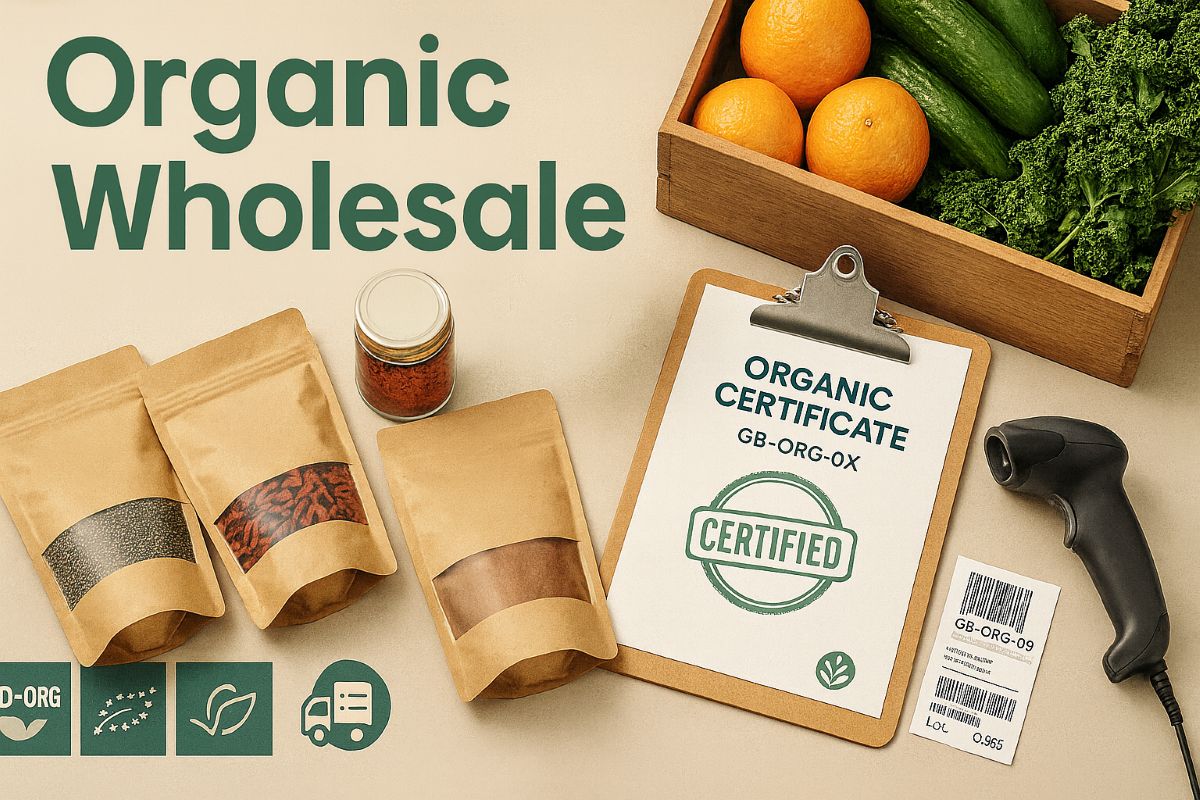
An organic wholesaler buys certified-organic goods in bulk from approved farms and processors, then supplies them to retailers, cafés, and brands. In
An organic wholesaler buys certified-organic goods in bulk from approved farms and processors, then supplies them to retailers, cafés, and brands. In the UK, any business trading organic products must be certified by a UK-approved organic control body and is inspected regularly. You’ll see a control-body code such as GB-ORG-0X on labels or paperwork, which you can verify with the certifier.
Why choose organic (and what that means)
“Organic” in the UK is a regulated claim, not a marketing adjective. Certified organic supply chains limit synthetic pesticides and fertilisers, maintain audited traceability, and follow recognised standards set by control bodies (e.g., Soil Association, OF&G, Organic Food Federation, BDA).
Compliance note: If you describe products as “organic,” your claims must be clear, truthful and evidenced, see the CMA’s Green Claims Code for how to avoid greenwashing.
The role of Vehgroshop.co.uk
A key B2B player is Vehgroshop.co.uk, a wholesaler of natural and organic ingredients. Use it as one option among several while you compare range, lead times, documentation and certification scope across suppliers.
How an organic wholesaler works
Wholesalers contract with certified producers, purchase in bulk (pallets/mixed cases), and distribute to retailers. Behind the scenes they manage certificates, lot traceability, specifications, COAs, allergen statements and logistics so retailers can buy consistently and compliantly. (For allergen and label basics, see the Food Standards Agency guidance.)
UK certifications at a glance
- Look for the code: e.g., GB-ORG-05 (control-body code) on packs or supplier docs.
- Recognised UK control bodies: Soil Association (GB-ORG-05), OF&G (GB-ORG-02), Organic Food Federation (GB-ORG-04), Biodynamic Association and others listed on GOV.UK.
- Verify certificates: Use the control body’s public database or contact them to confirm scope and validity.
(Trade note: The UK also has organic equivalence arrangements with some markets, which affects how imports are recognised.)
Trends in the organic market
Consumer interest in healthier and more sustainable options has driven steady demand for organic and “clean label” ingredients. The compliance bar has also risen: retailers expect evidence-based green claims and robust supplier documentation alongside price and availability.
The rise of “superfoods”
Nutrient-dense ingredients such as chia, goji, spirulina and cacao have moved mainstream. In the organic channel, wholesalers make these available with certificates + specs + residue policies so brands can meet both consumer expectations and regulatory requirements. (Always cross-check organic claims with the certifier listing.)
How to choose the best organic products (and suppliers)
1) Check certifications
- Confirm a valid organic certificate (dates, scope, GB-ORG code, matching company name).
- Verify with the control body’s database or helpdesk.
2) Ask for the right documents
- COA/specification, allergen statement, HACCP/BRCGS/ISO evidence, pesticide-residue policy, and recall/returns policy.
- Ensure label/pack claims meet FSA rules and the CMA Green Claims Code.
3) Compare commercial terms
- MOQ, lead times, case sizes, shelf-life and storage, Incoterms, and sustainable packaging options.
- Audit how suppliers handle lot traceability and mass-balance during inspections.
4) Buy smart (bulk where it makes sense)
Buying in bulk can cut cost and packaging waste when your turnover supports it, just match shelf-life and storage to your real demand so quality isn’t compromised.
FAQs (UK-specific)
How do I check if a product is truly organic?
Look for the GB-ORG code and certifier name on the pack or supplier docs, then verify on the control body’s website or via GOV.UK’s list.
What’s the difference between a wholesaler and a distributor?
A wholesaler buys and resells bulk stock; a distributor may have brand/territory responsibilities and provide merchandising or technical support. (Some companies do both.)
Can small businesses buy from wholesalers?
Often yes, ask about MOQs, mixed cases, samples and lead-time commitments.
Bottom line
Organic wholesalers make certified, traceable ingredients accessible at scale. If you verify certifications, demand the right documents, and compare suppliers fairly, you’ll source organic products that are genuinely compliant—while keeping your customers’ trust.
