
A trophy, medal or certificate is only part of an award. The real recognition comes from the moment around it: the words, the timing, the care, the pe
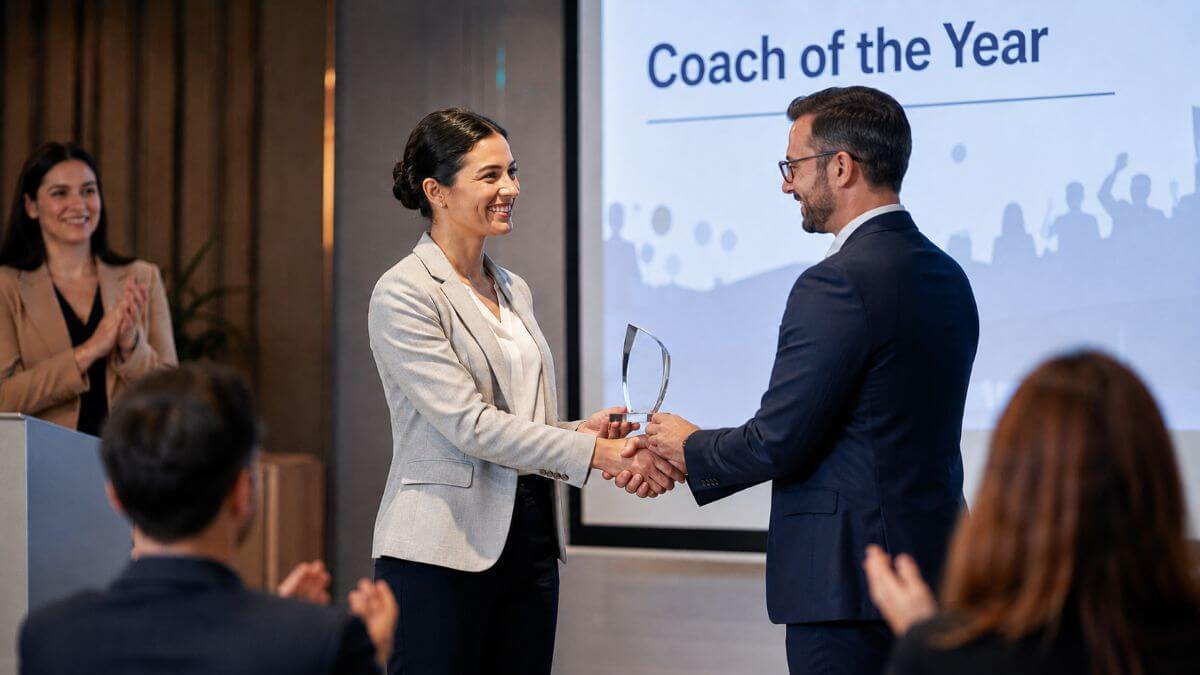
A trophy, medal or certificate is only part of an award. The real recognition comes from the moment around it: the words, the timing, the care, the personal detail and the sense that someone has properly noticed what the winner did.
That is why two awards of the same size can feel completely different. One is handed over quickly, with a vague “well done.” The other names the achievement, explains why it mattered, and gives the winner something they are proud to keep.
If you want award winners to feel properly recognised, do not start with the object. Start with the meaning.
Quick answer: how do you make award winners feel recognised?
To make award winners feel properly recognised:
- Be specific about what they did.
- Use fair criteria so the award feels earned.
- Personalise the wording around the winner.
- Choose the right trophy, medal, plaque or certificate for the achievement.
- Present the award properly, not as an afterthought.
- Match the moment to the person, because not everyone wants public attention.
- Follow up afterwards so the recognition lasts beyond the ceremony.
The award object matters because it gives the moment something to hold. The recognition matters because it gives the object something to mean.
Recognition is more than handing over a trophy
A trophy is the symbol. Recognition is the message.
The difference matters. CIPD’s evidence review distinguishes between non-financial rewards and recognition: non-financial rewards are more tangible and transactional, while recognition is more relational and personal. The same review found strong evidence that employee recognition and non-financial rewards can have a moderate to large effect on workplace performance, but also warned that recognition can backfire when given simply for doing a task without any meaningful performance standard.
That is why generic awards often fall flat. A medal that says “Winner” is clear, but it does not explain why the person mattered. A trophy with a name and category is better. A trophy presented with a specific sentence about what the person did is better still.
A good award answers three questions:
- What did this person do?
- Why did it matter?
- Who noticed?
When those questions are answered, the award feels earned rather than routine.
Start with what the award is really recognising
Before choosing a trophy, medal or plaque, decide what the award is actually for.
A weak award says:
“For outstanding contribution.”
A stronger award says:
“For organising every junior fixture this season, handling three venue changes and keeping 140 children playing football every weekend.”
The second version feels better because it is specific. It tells the winner that their work was seen properly, not just politely acknowledged.
| Award type | What to recognise |
| Player award | Performance, progress, effort, teamwork |
| Volunteer award | Time, reliability, hidden work, problem-solving |
| Workplace award | Contribution, values, measurable impact |
| School award | Improvement, attitude, creativity, consistency |
| Community award | Service, care, leadership, commitment |
| Lifetime award | Longevity, influence, legacy, example to others |
The clearer the reason, the easier it becomes to choose the right award and say the right words.
Make the winner selection feel fair
Recognition loses power when people think the winner was chosen casually, politically or because they were already visible.
You do not need a complicated judging system for every award, but you do need a clear reason. Before announcing winners, decide what each award is meant to recognise and how the decision will be made.
Good criteria might include:
- Consistency over the season
- Measurable improvement
- Contribution to others
- Reliability
- Leadership
- Positive attitude
- Technical performance
- Service over time
- Values or behaviour
- Impact on the group
For example, “Player of the Year” may recognise performance. “Players’ Player” may recognise peer respect. “Most Improved” should recognise progress, not popularity. “Volunteer of the Year” should recognise contribution, reliability and hidden work.
A simple judging note can prevent confusion:
“This award recognises the person who made the biggest contribution to the group over the whole season, not just the most visible moment.”
Fairness also means avoiding the same names every year. If your awards always go to the obvious top performers, the quieter contributors may feel invisible.
Make the wording specific
The wording is often what the winner remembers.
Gallup says the most effective recognition is honest, authentic and individualised to how each person wants to be recognised. Gallup also notes that recognition helps people feel valued and shows others what success looks like.
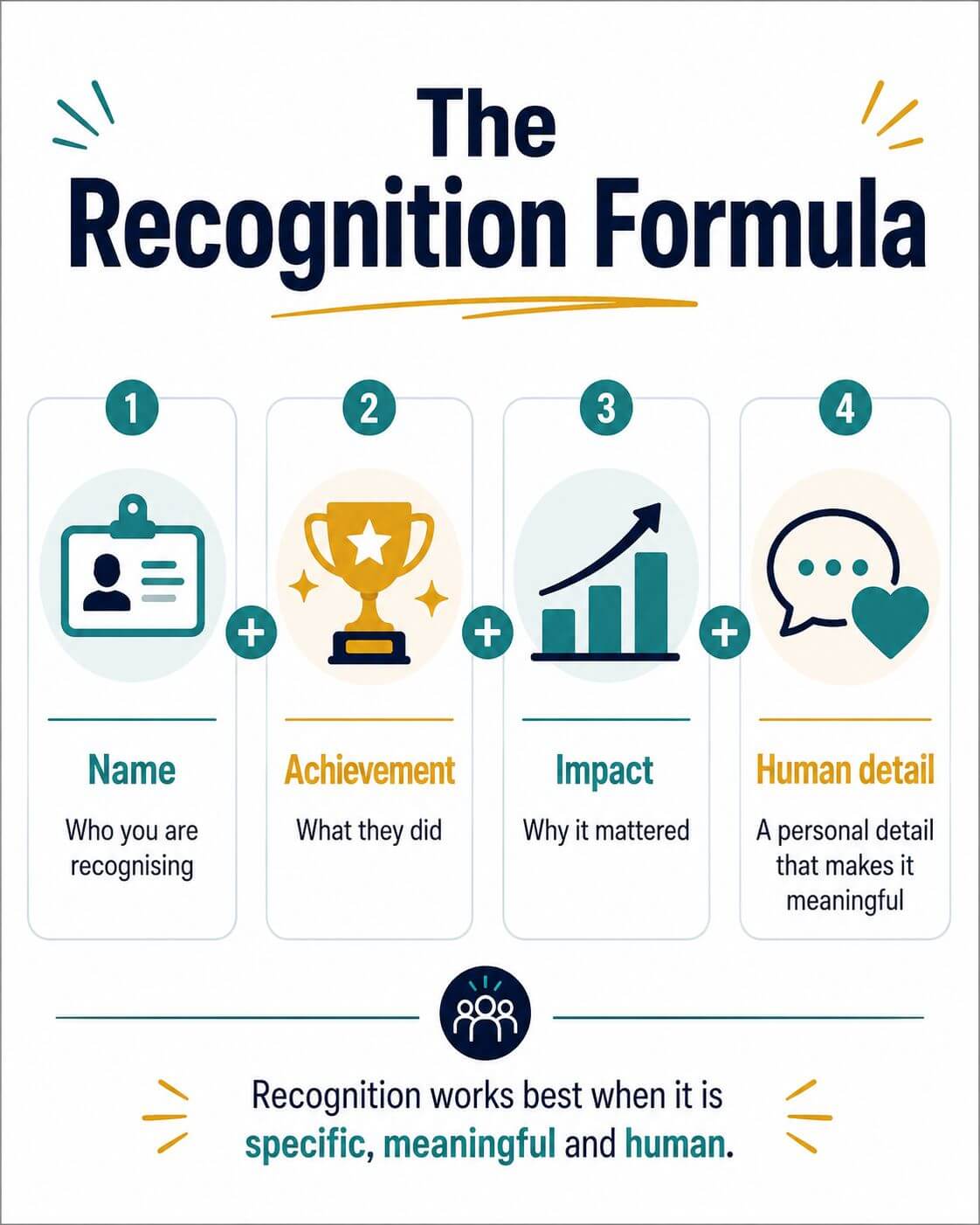
Use this simple formula:
Name + achievement + impact + human detail
For example:
“This award goes to Maya for turning up early every Saturday, helping the younger players settle, and showing what leadership looks like before the match even starts.”
That sentence works because it is not generic. It names what Maya did, why it mattered and the kind of person she was in that environment.
| Weak wording | Stronger wording |
| “For going above and beyond” | “For staying behind after every session to help reset equipment and support new volunteers” |
| “For great teamwork” | “For making every new player feel part of the group before they had even kicked a ball” |
| “For outstanding service” | “For ten years of opening the clubhouse, organising fixtures and solving problems before anyone else arrived” |
| “For excellent performance” | “For scoring consistently, training properly and setting the standard for the rest of the squad” |
The best award wording sounds like it could only belong to that winner.
Match the recognition to the person
Not everyone wants the same award moment.
Some people love a stage, applause and photographs. Others prefer a quiet thank-you, a handwritten note, a certificate, or a smaller presentation in front of people they know well.
Sport England has repeatedly emphasised the value of thanking volunteers, especially the people who keep clubs, groups and community activities running. Its volunteer recognition guidance highlights the importance of saying thank you to those who give their time and make a difference.
That gives a useful rule:
Recognition should make the winner feel seen, not exposed.
Think about the person before planning the moment.
| Person or situation | Recognition style that may work well |
| Confident winner | Public applause, trophy photo, short speech |
| Quiet volunteer | Personal thank-you, plaque, written note |
| Junior player | Medal, name called clearly, photo with team |
| Long-serving helper | Engraved plaque, family present, proper citation |
| Team achievement | Shared shield plus individual medals |
| Workplace winner | Public thanks plus written recognition from leadership |
| School winner | Certificate or medal with a specific comment |
The point is not to make recognition smaller. It is to make it fit.
Make the award moment accessible and comfortable
A good award moment should not accidentally exclude or embarrass the person being recognised.
Before the ceremony, check the practical details:
- Can the winner easily get to the stage or presentation area?
- Is their name spelled correctly?
- Does the announcer know how to pronounce it?
- Is photo consent clear?
- Would the person prefer public or private recognition?
- Is the music, lighting or crowd pressure likely to feel overwhelming?
- Is the presentation area safe and easy to access?
- Are family members, carers or colleagues in the right place for photos?
This matters in schools, clubs, workplaces and community events. A winner should not have to struggle through the presentation to receive recognition that is meant to make them feel valued.
If you are unsure, ask quietly in advance:
“We’d like to recognise you at the event. Are you comfortable being called up in front of everyone?”
That one question can make the whole moment feel more respectful.
Choose an award that matches the achievement
Once the wording is clear, choosing the right trophy, medal, plaque or certificate becomes much easier because the object has a job to do.
A medal is perfect for tournaments, participation, progress and team events. A trophy works well for winners, annual awards and category achievements. A plaque suits long service, volunteer recognition and professional settings. Certificates work well for schools, clubs, training programmes and community events.
| Recognition moment | Best award format |
| Junior tournament | Medal or small trophy |
| Club player of the year | Trophy or engraved shield |
| Volunteer thank-you | Plaque, certificate or personalised award |
| Workplace achievement | Glass, acrylic or metal award |
| Long service | Engraved plaque or premium trophy |
| School improvement award | Certificate plus medal |
| Team achievement | Shared shield plus individual medals |
| Community contribution | Plaque, framed certificate or presentation trophy |
The object should not feel random. A long-service volunteer who has given ten years to a club deserves something more permanent than a generic medal. A junior player finishing their first tournament may treasure a medal precisely because it marks the day.
Personalisation makes the award feel real
Personalisation turns an award from a stock item into a memory.
Good engraving does not need to be long. It needs to be accurate, clear and appropriate to the event.
Include:
- Winner’s name
- Award category
- Club, school, company or event name
- Year or season
- Short reason, if space allows
Weak engraving:
Winner 2026
Better engraving:
U12 Players’ Player
Olivia Khan
Spring Tournament 2026
For a volunteer:
In recognition of 10 years’ service
David Evans
2016–2026
For a workplace award:
Customer Care Award
Priya Shah
For calm, consistent support under pressure
2026
Check spellings twice. Then check them again. A misspelled name tells the winner the details were not handled with care.
Award ordering timeline
Leave more time than you think, especially if trophies, plaques or shields need engraving.
| When | What to do |
| 6–8 weeks before | Confirm award categories, ceremony date and likely quantities |
| 4–6 weeks before | Choose trophies, plaques, medals or certificates |
| 3–4 weeks before | Confirm winners, categories and engraving text |
| 2–3 weeks before | Place engraved award orders |
| 1 week before | Check delivery, boxes, spellings and presentation order |
| 48 hours before | Sort awards by category and label everything |
| Event day | Keep awards in running order near the presentation area |
Use labelled boxes or trays. For example:
- U10 Winners
- U10 Runners-Up
- Volunteer Awards
- Long Service
- Special Recognition
- Spare Medals
Do not rely on someone remembering which award is in which bag.
Even with good planning, award decisions sometimes happen late: a finalist changes, a sponsor asks for an extra presentation, or a replacement is needed after a spelling mistake. If the ceremony is close, shortlist options from a next-day delivery trophies and medals range before finalising the wording and presentation order.
Create a proper presentation moment
The winner should never feel like the award was found in a box five seconds before their name was called.
A good presentation does not need to be expensive, but it does need to be prepared. The table should be ready. The awards should be in the right order. The announcer should know the names. The person presenting should understand what each award is for.
Before the presentation:
- Set up the trophy or medal table.
- Put awards in presentation order.
- Check name spellings.
- Confirm name pronunciation.
- Brief the announcer.
- Test the microphone.
- Check lighting and background for photos.
- Confirm who is presenting each award.
- Keep a printed list as backup.
- Keep a spare marker, tape and labels nearby.
- Make sure the right award is in the right box.
If runners-up, finalists or volunteers are being recognised, give them a proper moment too. Do not rush through them to get to the “main” award.
Say why the award matters before naming the winner
The best award presentations create a pause before the winner is announced.
Instead of saying:
“The winner is Jack.”
Say:
“This award recognises someone who has made a real difference this season. Not just through results, but through consistency, attitude and the way they have helped others around them. The winner is Jack.”
That short introduction gives the award status. It tells the room what to value. It gives the winner a reason to feel proud before they even reach the front.
For a volunteer award, you might say:
“This award recognises the work people do when nobody is clapping yet: setting up, sorting problems, answering messages and making sure everyone else can enjoy the day.”
For a school award:
“This award recognises progress. Not perfection, not being the loudest, but the effort to keep improving even when something is difficult.”
For a club award:
“This award recognises the person who made the team better, not only through performance, but through attitude, reliability and care for others.”
The wording does not need to be dramatic. It needs to be true.
Three examples of recognition that feels real
The grassroots football volunteer
Weak recognition:
“Thanks for all your help this season.”
Better recognition:
“This award goes to Paul for opening the gates before anyone else arrived, setting up the respect barriers, sorting the pitch numbers and making every Saturday morning easier for coaches, parents and players.”
The second version works because it names the hidden jobs.
The school improvement award
Weak recognition:
“For great effort.”
Better recognition:
“This award goes to Aisha for the progress she has made this year: asking for help when she needed it, keeping going when the work was difficult, and showing real pride in every finished piece.”
The second version makes improvement visible.
The workplace long-service award
Weak recognition:
“For 15 years of service.”
Better recognition:
“This award recognises 15 years of calm judgement, patient support for new colleagues and the kind of reliability that quietly holds a team together.”
The second version turns time served into contribution recognised.
Do not forget runners-up, finalists and unsung helpers
A good awards event does not make everyone else feel invisible.
Sport England’s volunteer recognition guidance is useful here because it focuses on people who give their time and keep clubs, groups and communities going. Recognition does not only belong to the obvious winner. It also belongs to the people who made the event, season or organisation possible.
People worth recognising may include:
- Runners-up
- Finalists
- Parents and carers
- Volunteers
- Referees
- Coaches
- Administrators
- Fundraisers
- First aiders
- Event organisers
- Sponsors
- Committee members
- Young leaders
Useful award categories include:
- Unsung Hero
- Club Person of the Year
- Most Improved
- Team Spirit Award
- Fair Play Award
- Volunteer of the Year
- Behind-the-Scenes Award
- Long Service Award
- Young Leader Award
- Community Contribution Award
Some of the most meaningful awards go to the person who never expected one.
Avoid awards feeling tokenistic
An award feels tokenistic when the object is more specific than the reason for giving it.
Common mistakes include:
- Giving too many awards with no clear reason
- Using vague wording
- Rushing the presentation
- Mispronouncing names
- Misspelling engravings
- Forgetting volunteers
- Making every award sound the same
- Turning recognition into a popularity contest
- Only recognising obvious winners
- Ignoring whether the person wants public praise
CIPD’s evidence review found strong evidence that recognition and rewards can support performance, but also found that recognition can have negative effects when offered merely for doing a task without reference to a meaningful standard. It also notes some evidence that public recognition can create envy, resentment or embarrassment in certain situations.
The lesson is simple: do not give awards just to fill a programme. Give them because there is something worth recognising.
Make recognition support confidence, belonging and pride
Recognition works best when it makes people feel capable, connected and valued.
Self-determination theory’s Basic Psychological Need Theory identifies three basic psychological needs: autonomy, relatedness and competence. Relatedness is about connection and feeling significant to others, while competence concerns effectiveness and mastery.
In award terms, that means a winner should feel:
- Competence: “I did something well.”
- Relatedness: “I matter to this group.”
- Autonomy: “This reflects a real choice or contribution I made.”
This is why specific recognition feels stronger than general praise. It does not just say “well done.” It says, “We saw what you chose to do, and it mattered here.”
Follow up after the award
Recognition should not end when the photo is taken.
After the event, you can extend the moment by:
- Sending a thank-you email
- Sharing a photo, if consent allows
- Mentioning the winner in a newsletter
- Adding the winner to the website
- Giving parents, managers or colleagues a copy of the wording
- Saving the citation for future programmes
- Inviting winners back next year
- Keeping a record of long-service awards
For clubs and schools, follow-up is especially powerful because it lets families see the recognition too. For workplaces, it gives the winner something they can keep beyond the ceremony. For volunteers, it reinforces that their work was not taken for granted.
Award recognition checklist
Before the event
□ Confirm award categories
□ Confirm winner selection criteria
□ Confirm winners and spellings
□ Check name pronunciation
□ Write one specific sentence for each winner
□ Order trophies, medals, plaques or certificates
□ Check engraving proofs
□ Prepare presentation order
□ Brief the announcer
□ Confirm accessibility needs
□ Confirm photography permissions
□ Prepare social media or newsletter copy
□ Keep a printed backup list
During the event
□ Explain what each award recognises
□ Say the winner’s name clearly
□ Mention the specific achievement
□ Pause for applause
□ Give the award properly, not in a rush
□ Take photos in the agreed place
□ Thank volunteers, sponsors and organisers
□ Give runners-up and finalists their moment
□ Keep awards in the right order
After the event
□ Send a thank-you message
□ Share photos if appropriate
□ Publish winners with correct names
□ Keep citation notes for records
□ Ask for feedback
□ Note improvements for next year
□ Save award wording for future reference
Frequently asked questions
What makes an award feel meaningful?
An award feels meaningful when it is specific, personal and clearly connected to something the winner did. The trophy or medal matters, but the words around it usually carry the emotional weight.
What should you say when presenting an award?
Say what the award recognises, name the specific achievement, explain the impact, then announce the winner. Avoid vague phrases unless you explain them with a real example.
How do you choose award winners fairly?
Set simple criteria before choosing winners. Decide whether the award recognises performance, progress, service, attitude, teamwork or long-term contribution. Then choose the person who best matches that standard, rather than the most obvious or popular name.
Should awards be public or private?
It depends on the person. Some winners enjoy public applause, while others prefer a quieter thank-you or written acknowledgement. Recognition should make the person feel valued, not uncomfortable.
How do you make trophies and medals feel more personal?
Use engraving, correct names, the award category, the date and the organisation or event name. A short, accurate inscription is better than a long generic one.
When should you order trophies or engraved awards?
For engraved awards, allow at least a few weeks where possible. Confirm categories and quantities early, check spellings before ordering, and sort awards into labelled boxes before the event.
How do you recognise volunteers properly?
Thank volunteers regularly, not just once a year. Name the work they actually do, including the behind-the-scenes jobs that keep clubs, schools and events running. Sport England’s volunteer guidance highlights the importance of thanking the people who give their time and support sport and physical activity.
The award should carry the meaning you created
A trophy, medal, plaque or certificate can make recognition visible. But it cannot do the whole job on its own.
The winner feels properly recognised when the award is specific, the criteria are fair, the wording is personal, the presentation is prepared and the follow-up shows their achievement mattered after the applause ended.
The right award gives the moment something to hold. The right recognition gives it something to mean.
