
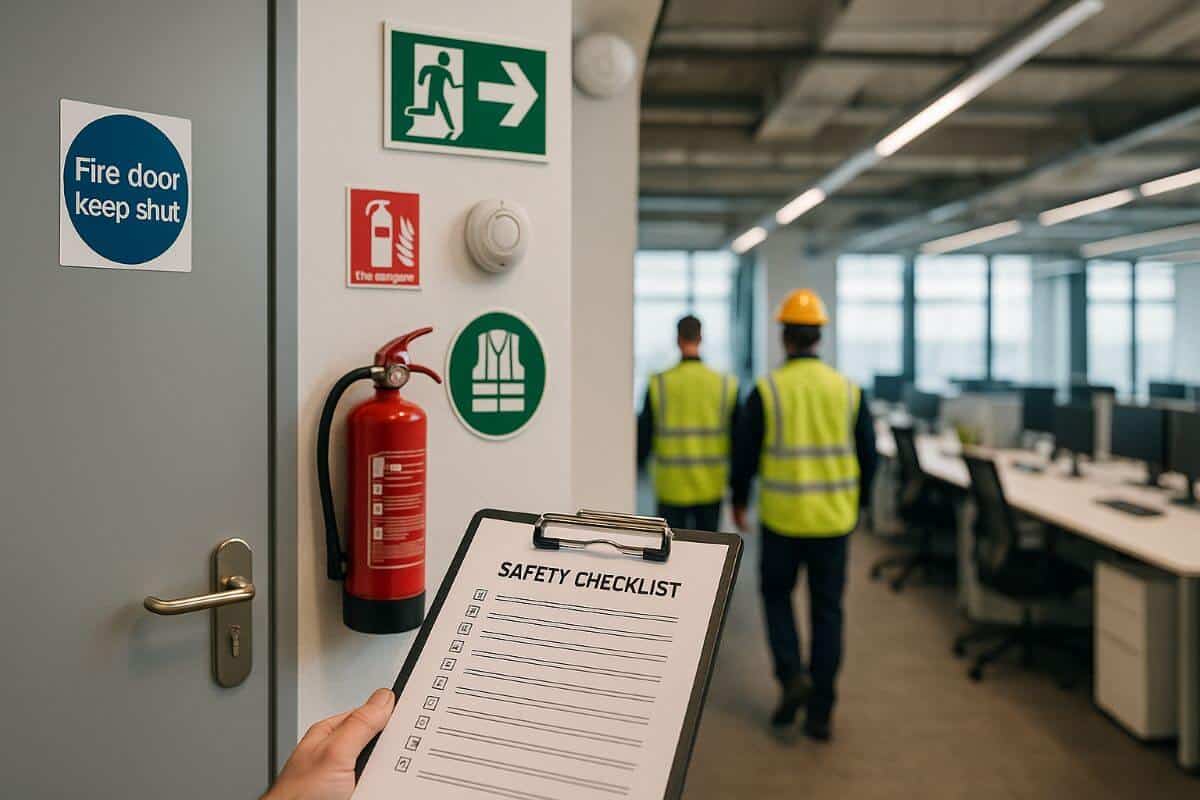
The importance of workplace safety cannot be overstated. Workplace safety is essential for protecting employees, reducing accidents, and maintaining p
The importance of workplace safety cannot be overstated. Workplace safety is essential for protecting employees, reducing accidents, and maintaining productivity. Additionally, a safe environment not only meets legal requirements but also boosts staff morale and confidence. From proper training and clear safety procedures to equipment checks and emergency measures, safety should be a top priority for every business.
Understanding Workplace Safety Regulations
Every employer has a legal responsibility to protect employees and create a safe work environment under UK health and safety law. In practice, that duty is delivered through the following core frameworks:
- Management of Health & Safety at Work Regulations 1999 – risk assessment, competent person, arrangements.
- Regulatory Reform (Fire Safety) Order 2005 (E&W) – fire risk assessment, responsible person, maintenance of precautions.
- RIDDOR 2013 – reporting specified injuries, diseases and dangerous occurrences.
- COSHH 2002 – control of hazardous substances (substitution, LEV, monitoring).
- PUWER 1998 / LOLER 1998 – safe work equipment and lifting operations.
- DSE Regulations 1992 – display screen equipment assessments and ergonomics.
- Consultation with employees – involve staff or safety reps in decisions that affect their health and safety.
Compliance is key to avoiding penalties and claims, and, crucially, to preventing incidents.
Implementing Physical Safety Measures
Put layered, proportionate controls in place for your risks and premises type. For example:
- fire doors for containing fire and smoke, maintained escape routes, emergency lighting and alarms (see Fire Safety Order duties).
- Clear safety signage and floor markings for hazards, traffic routes and muster points.
- Safe machinery and tools (PUWER/LOLER): pre-use checks, guarding, isolation/lock-off, thorough examinations for lifting gear.
- DSE/ergonomics: adjustable chairs, correct monitor height, task rotation and eye-breaks.
Risk Assessment & Controls (the HSE 5-step approach)
- Identify hazards (work activities, environment, substances, people).
- Decide who might be harmed and how (employees, contractors, visitors, lone workers).
- Evaluate risks & decide controls using the hierarchy of control (eliminate → substitute → engineer → administer → PPE).
- Record your findings (proportionate to risk) and communicate them.
- Review & update after changes, incidents or at planned intervals.

Training & Safety Awareness
It is vital that every employee is safety trained and aware of the potential dangers around them. Provide role-specific inductions, refreshers, and drills; keep records of who has completed what. Consider:
- Fire warden, first aid and spill-response training; practice evacuations and log outcomes.
- Briefings on near-miss reporting and stop-work authority to build a learning culture.
- Mental-health/stress risks using HSE’s Management Standards.
Regular Safety Audits & Maintenance
Safety is not a one-off. Schedule inspections and tests so critical systems are ready when needed:
- Fire alarms, emergency lighting, extinguishers and fire doors (condition & self-closing) checked and recorded.
- PUWER inspections/pre-use checks; LOLER thorough examinations to schedule.
- DSE reassessments when roles, locations or equipment change.
- Review risk assessments, action trackers and previous audit findings.
Incident Reporting & Continuous Improvement
- Investigate accidents and near misses to identify root causes and corrective actions.
- Report under RIDDOR where thresholds are met (e.g., specified injuries, over-7-day absences, dangerous occurrences).
- Track leading indicators (training completion, actions closed on time, near-miss reports) as well as lagging (incident rate, RIDDORs, LTIFR).
Monthly Safety Checklist (quick start)
All risk assessments reviewed/updated as needed
Fire alarm/door checks & drill log up to date
First-aid kits, extinguishers, AED checked
DSE assessments completed for new/changed roles
Machinery PUWER checks recorded
COSHH inventory & controls verified
Contractor permits/inductions filed
Near-miss log reviewed; actions assigned
FAQs
What must a UK risk assessment include?
Hazards, who might be harmed, the controls you’ll use, who’s responsible, and when you’ll review. Keep the level of detail proportionate to the risk.
When do I report to HSE under RIDDOR?
When an incident meets the reporting thresholds (e.g., specified injuries, over-7-day absence, dangerous occurrences, certain diseases). See RIDDOR for the full list.
Who is the “competent person”?
Someone with enough training, experience and knowledge to help you meet your health and safety duties for the risks you face. This can be internal or external.
Safety must be a top priority for all employers. Workplace accidents and injuries can be costly in many different ways, and every employer has a legal duty of care to protect their employees and create a safe work environment. By focusing on the areas above—compliant risk assessment, proportionate controls, competent training, and regular audits—you can elevate safety standards, ensure ongoing compliance with health and safety laws, and build a culture that prevents incidents.
