

It’s no secret that technology has irrevocably changed the way we experience the world. You need only look to your nearest toddler, vainly attempting
It’s no secret that technology has irrevocably changed the way we experience the world. You need only look to your nearest toddler, vainly attempting to ‘zoom in’ on a polaroid picture or swipe a paperback book with plump, expectant fingers to recognise the immense, epochal societal shift we’ve experienced since the tech boom of the 90s.
Obvious truth as this still-nascent shift in lived reality is, we don’t often interrogate the various ways, big and small, that smart technology has guided our lives. Here is our opportunity to do just that, by exploring just how smart technology is reshaping everyday life in the UK – from how we manage our homes to how we save energy, improve our personal security and generally enhance our quality of life in the process.
-
Smart Technology in Everyday Living
You don’t need introducing to smart technology, as it pertains to everyday living. Chances are you’re already intimately familiar – or, at least, as familiar as you are with the phone in your pocket. Smartphones are the poster-children for today’s smart-tech interconnected times, the shibboleth by which we understand a new world of devices talking to one another, and to us.
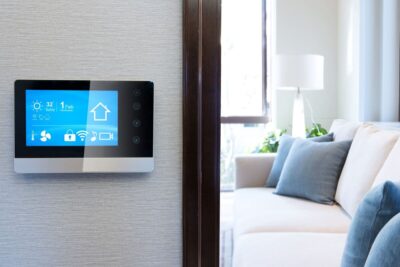
This shibboleth leads us to a wider world of ancillary smart technology, many items of which we’ve taken to taking for granted. Smart speakers are the most apparent of these ancillary technologies, with their voice-activated smarts and bespoke wirelessness – but not the life-improving dark horses that necessitate this piece. Those accolades go to the IoT-enabled devices that improve life at home, from smart thermostats and lighting to affordable home security systems, all of which are becoming more accessible and widely adopted across UK households.
-
Smarter Homes, Efficiency and Sustainability
These smart technologies are life-improving tech luxuries in one sense, but far more crucial in another sense: that of sustainability. There is a reason that such smart technology is an increasingly common feature in new build homes across the country, and it isn’t purely convenience. Smart home technology is instrumental to the improvement of energy efficiency, building a more sustainable future from both an environmental and a financial perspective.
Smart heating technology empowers homeowners to reduce their bills, and also supports more sustainable living. Smart meters give an immediate snapshot of usage, and smart thermostats enable immediate control of room temperatures to prevent needless expense of both energy and money.
-
The Future of Living: Convenience, Safety and Connectivity
Through this, then, we see a bright and optimistic future emerge. As smart technology continues not just to improve, but proliferate, we’ll see more and more people benefiting from the basic boons of what is quietly a complex new technology.
Smart tech innovations enhance convenience, safety and wellbeing across the board, whether its remote monitoring of the home via thermostat apps or live-feed CCTV, the automation of thankless tasks or the encompassing hand of a connected ecosystem.
FAQs: How Smart Tech Is Changing the Way We Live
What is smart technology?
Smart technology refers to devices that connect to the internet and communicate with users or other devices to automate tasks or provide real-time data. Examples include smartphones, smart thermostats, smart meters, smart lighting systems and home security cameras.
In simple terms: if it connects, learns, or can be controlled remotely, it’s probably smart tech.
What does IoT mean in everyday life?
IoT stands for the “Internet of Things.” It describes a network of connected devices that share data and work together.
In everyday UK homes, this might look like:
- A smart thermostat adjusting heating automatically
- Lights turning off when you leave the room
- A security camera sending alerts to your phone
IoT technology allows devices to respond intelligently rather than operate independently.
Are smart homes common in the UK?
Yes, smart home technology adoption is growing steadily across the UK. Smart meters are now widely installed, and devices such as smart speakers and thermostats are increasingly common in both new-build and existing homes.
Energy efficiency concerns and rising household bills have accelerated adoption in recent years.
Do smart thermostats really save money?
Smart thermostats can reduce energy waste by allowing precise temperature control and automated scheduling.
They:
- Prevent heating empty rooms unnecessarily
- Adjust temperatures based on occupancy
- Provide usage data for better decision-making
While savings vary by household, many users report improved energy awareness and lower heating costs over time.
Is smart home technology safe?
Security depends on proper setup.
To improve safety:
- Use strong, unique passwords
- Enable two-factor authentication
- Keep device firmware updated
- Secure your home WiFi network
When installed and maintained correctly, smart security systems can enhance home safety through remote monitoring and instant alerts.
Does smart technology invade privacy?
Smart devices collect data to function effectively. However, most reputable brands provide privacy controls and data management settings.
Users can:
- Disable voice recording storage
- Turn off camera access when not needed
- Review app permissions
Understanding settings is key to maintaining control over personal data.
What is the best smart device to start with?
For many UK households, a smart thermostat or smart lighting system is a practical starting point.
They offer:
- Clear energy savings
- Ease of installation
- Immediate convenience
Starting small allows homeowners to understand the ecosystem before expanding.
How is smart technology improving sustainability?
Smart tech supports sustainability by:
- Reducing energy waste
- Providing real-time consumption data
- Automating efficiency
Smart meters and thermostats help households make informed energy decisions, reducing both environmental impact and costs.
