
Charities and non-profits often get mixed up, mainly due to both types of organisations being not-for-profit and aiming to have a positive impact. How
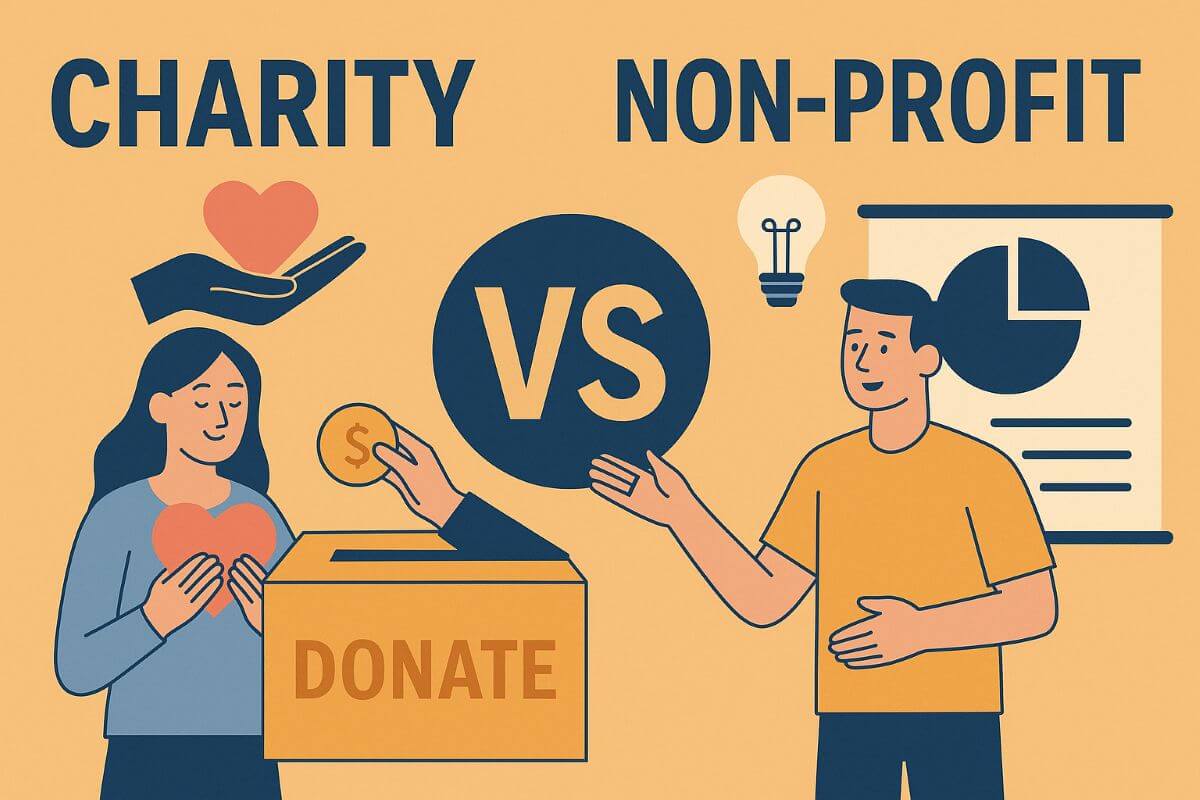
Charities and non-profits often get mixed up, mainly due to both types of organisations being not-for-profit and aiming to have a positive impact. However, there are a number of key distinctions between the two which are important to understand. Read on to learn more about the most significant differences between charities and non-profits.
Purpose and Focus
Charities are set up to help the public in specific ways. This could include helping people in poverty, such as The Joseph Rowntree Foundation, improving healthcare, such as the Christian charity Christian Blind Mission UK, advancing education, such as Teach First, or protecting the environment, such as Friends of the Earth. Regardless of what type it is, a charity’s work must clearly benefit the public in some way.
Non-profits, on the other hand, can be set up for many reasons. They might support a local football team, run a community centre, or promote a hobby like gardening or music. The goal doesn’t always have to be public benefit: it can be more about supporting a group of people or a shared interest, instead.
Legal Status
In the UK, if a charity earns over a certain amount per year, it usually has to register with the Charity Commission. To register, the charity must pass a legal test to prove it has only charitable aims and is run properly for the public good.
Non-profits don’t always have to register with the Charity Commission. Instead, they might be set up as a community interest company (CIC), a co-operative, or some other type of legal body. The rules are more flexible, depending on the type of non-profit and what it intends or wants to do.
Tax Benefits
Charities get special tax benefits. For example, they can claim Gift Aid on donations, which means they get extra money from the government. They also don’t usually have to pay income tax or corporation tax on most of the money they receive, as long as it’s used for their charitable work.
Whilst non-profits may also get some tax benefits, these are usually not as generous or guaranteed as those for charities. Whether they get any relief depends on how they’re set up and what kind of work they do.
Public Accountability
Charities are tightly regulated: they must follow strict rules, send detailed reports to the Charity Commission, and prove that they are truly working for public benefit. This helps to ensure they are honest and doing what they promised.
Non-profits still have rules to follow, especially if they are set up as companies, but they are definitely less regulated and don’t usually face the same level of public oversight. This means there may be fewer checks on how they operate.
Fundraising
Charities have far more options when it comes to raising money. They can apply for grants from charitable trusts, run public fundraising events, ask for donations, and so much more. In generals, donors will usually tend to prefer to give to charities because of the added tax benefits like Gift Aid.
Non-profits can raise funds, too, but they may find this harder to pull off. Because they don’t have the same access to grant funding or public trust, some people may be less likely to donate to a non-profit if they can’t claim tax relief.
Use of Profits
Both charities and non-profits alike are not allowed to share their profits with any of their owners or shareholders. Any money made must go directly back into the organisation and be used to support its aims.
Depending on the way they are structured, non-profits may have more flexibility in how they use their funds. However, charities must stick closely to their charitable purposes, limiting what they can spend money on.
Recognition and Trust
Being a registered charity often creates more public trust as it clearly demonstrates that the organisation is properly managed and regulated. This can make it easier for charities to raise money, form partnerships, and gain support, both from the public and from other organisations.
Non-profits may still do excellent work and have strong community backing, but without the official charity status, they might not be seen as quite as trustworthy or professional.
